

SJ - THE ACTUAL EXHIBITION AT THE GALLERY RENAISSANCE IS ENTITLED: SUMMER SALON D’ART. YOU HAVE SELECTED 28 ARTISTS LOCAL AND INTERNATIONAL. WHAT WAS THE MAIN IDEA AND THE CRITERIA FOR SELECTION?
SG - The idea for a large group show had been with me for some time. Living in London, I was always inspired by the Royal Academy’s Summer Exhibition—the energy, diversity, and sense of openness it brought.
This particular show was sparked by the work of one artist whose pieces felt rooted in classical tradition, yet thoroughly contemporary. That encounter led me to seek out other works with a similar sensibility, pieces that nodded to the past but spoke in a fresh, current voice.
As I explored further, I began to notice unexpected connections between artists of very different styles. That’s when the idea of embracing diversity, across style, background, and medium, took hold.
Rather than follow a rigid theme, I curated instinctively, selecting works that spoke to each other in surprising ways. The goal was to create a vibrant and thoughtful conversation among 28 artists who might not usually share the same space.

SJ - USUALLY, GALLERIES SHOW ONE OR TWO OR THREE ARTISTS BUT NOT 28! YOU HAVE BEEN INSPIRED BY THE CONCEPT OF THE SALON D’ART LAUNCHED IN THE 17TH CENTURY IN FRANCE AND ENGLAND. ONLY MEMBERS OF THE ACADEMY OF FINE ARTS WERE ALLOWED TO PARTICIPATE. IN YOUR CASE, YOUR INTENTION IS TO “BREAK THOSE RULES”, THINK OUT OF THE BOX, AND INVITE VISITORS TO OPEN THEIR EYES AND MINDS TO DIVERSITY IN CREATION. COULD YOU EXPLAIN YOUR MOTIVATIONS?
SG - Yes, I aimed to challenge some of the traditional expectations of what a gallery show should be. Geneva is a city rich in cultural history. Many notable artists, writers, and thinkers have passed through here. Yet today, despite having many talented artists, the local art scene can seem quite restrained.
There are certain “norms” that many galleries follow: limited artists, specific formats, or curatorial safe zones. With Summer Salon d’Art, I aimed to break from that and introduce something more dynamic to the space. I wanted to give Geneva a touch of that London-Paris spirit—where you walk into a room and are surprised, challenged, and inspired all at once.
It’s about inspiring viewers to see differently, to think differently, and to feel more. I believe in the power of art to connect people—not just to the work, but to each other. By curating a diverse range of artists and works, I hope visitors discover unexpected connections and conversations unfolding in the space.

SJ - WE UNDERSTAND THIS EXHIBITION TOOK A LOT OF TIME AND ENERGY TO BE IMPLEMENTED. HOW DO YOU ORGANIZE YOUR TIME FROM A TO Z ?
SG - This exhibition certainly demanded a lot—creatively and logistically. Time management was crucial, especially with so many artists involved. I approached the project in stages—starting with research and selection, followed by logistics, layout planning, and final installation. I created detailed spreadsheets to track deadlines, artwork information, and contracts, which helped keep everything on schedule.
I’m fortunate to have over 10 years of experience managing large-scale art projects worldwide, and those organisational skills have proven essential.
That said, no system can entirely eliminate the stress of the final weeks. There were some personally challenging moments during the lead-up to the opening, and I was genuinely touched by how supportive and understanding the artists were. Their flexibility, kindness, and encouragement helped me through, and I’m extremely grateful to them.
SJ - YOUR SELECTION FOCUSES MAINLY ON SMALL FORMATS TO COPE WITH THE SPACE AVAILABLE. MOST OF GALLERIES SHOW MEDIUM OR LARGE FORMATS NOWADAYS. CONTEMPORARY ART IS OFTEN BIG SCALE ! WHAT IS THE BEAUTY OF SMALL SIZES ? WHY CONTEMPORARY ARTISTS CHOOSE SMALL FORMATS TO EXPRESS THEIR IDEAS AND VISIONS ?
SG - It’s true that large-scale works tend to dominate the contemporary art market, often because they make an immediate visual impact. But there’s a quiet power in smaller works that I find deeply compelling.
Small formats require intimacy. They draw you in and encourage a more personal connection, often revealing the artist’s hand more clearly—brushstrokes, textures, and spontaneity. Typically, smaller works are studies or explorations of ideas that might later develop into larger pieces, and I enjoy witnessing that raw, unfiltered stage of creation.
Additionally, smaller works are more accessible, especially for younger collectors or those living in limited spaces. But beyond practicality, there’s something poetic about smaller artworks that speaks softly but profoundly.
SJ - IN THE EXHIBITION, YOU GATHER VARIOUS SUBJECTS AND STYLES MAINLY THROUGH PAINTING, DRAWING AND TEXTILE ART. TEXTILE ART COMES BACK IN THE FRONT STAGE NOWADAYS, ALTHOUGH THE TECHNIQUES DATE BACK FROM CULTURAL TRADITIONS. WHAT IS YOUR RELATIONSHIP TO THIS EXPRESSION ?
SG - Textile art possesses a captivating dual nature: it is both deeply rooted in tradition and fiercely contemporary. Recently, there has been a notable rebirth of interest in fibre-based works, with prominent galleries, art fairs, and institutions giving them the recognition they merit. I see textile art not just as a medium, but as a form of cultural storytelling. It often carries layers of heritage, memory, and craft. There’s a tactile intimacy to it, a sense of time woven into the very fabric—quite literally.
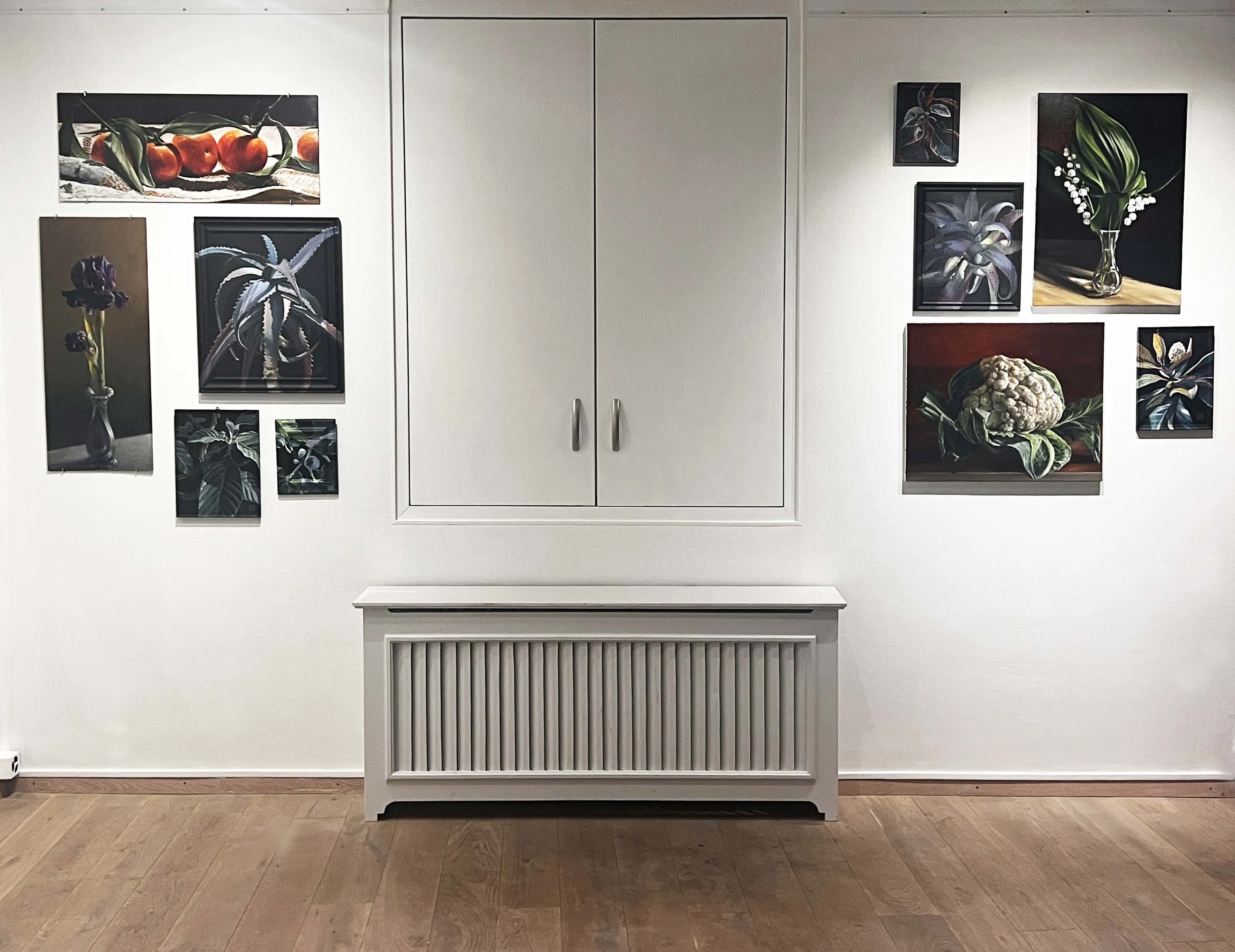
SJ - FOR EACH WALL, YOU STAGE A VERY HARMONIOUS EXHIBITION. COLOURS PLAY A MAJOR ROLE IN THIS SET UP. HOW DO YOU DESCRIBE YOUR RELATIONSHIP TO COLOURS? DO THEY HAVE SYMBOLISMS, OR ENERGIES INTRINSIC TO THEM ?
SG - Colour is such a powerful language. I believe we often underestimate its influence—not only visually but also on emotions and even physically.
Some excellent writers and thinkers have explored this in detail. For example, Michel Pastoureau’s work on the history and symbolism of colours demonstrates how cultural meanings are constantly changing. And Ben Street, in A History of Art in Four Colours, discusses how colour influences our interpretation of a work—sometimes more than the subject matter itself.
For me, colour in this exhibition became a tool for crafting rhythm and atmosphere. With such a diverse range of artists and styles, creating visual harmony was essential. It was quite a challenge to balance contrast and cohesion. I allowed it to guide the emotional flow of the exhibition, almost like a score in music.